A Walk with the Experts: Saturday 15th September
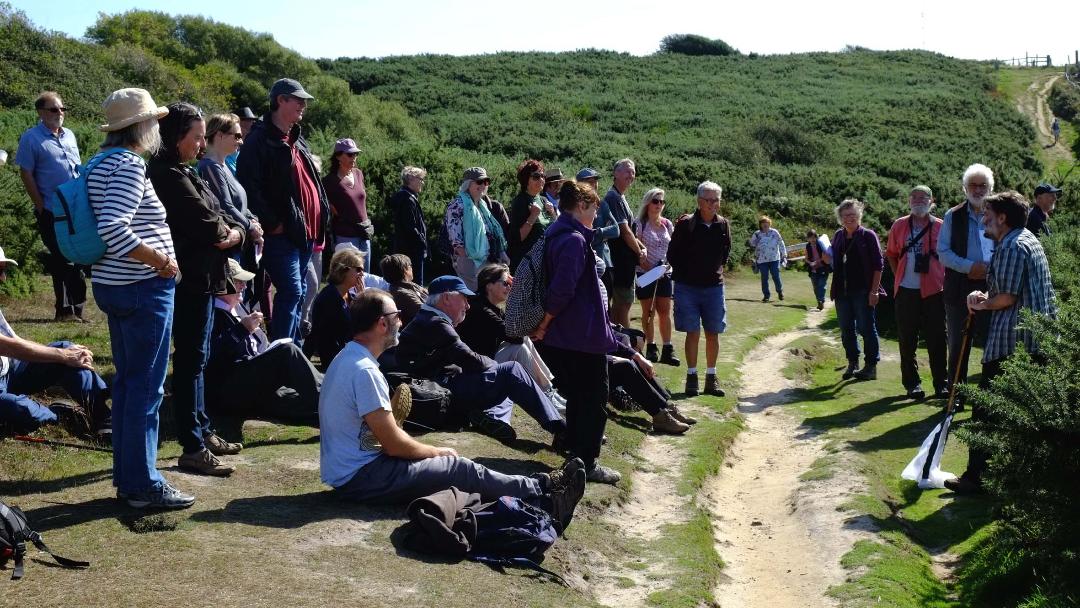
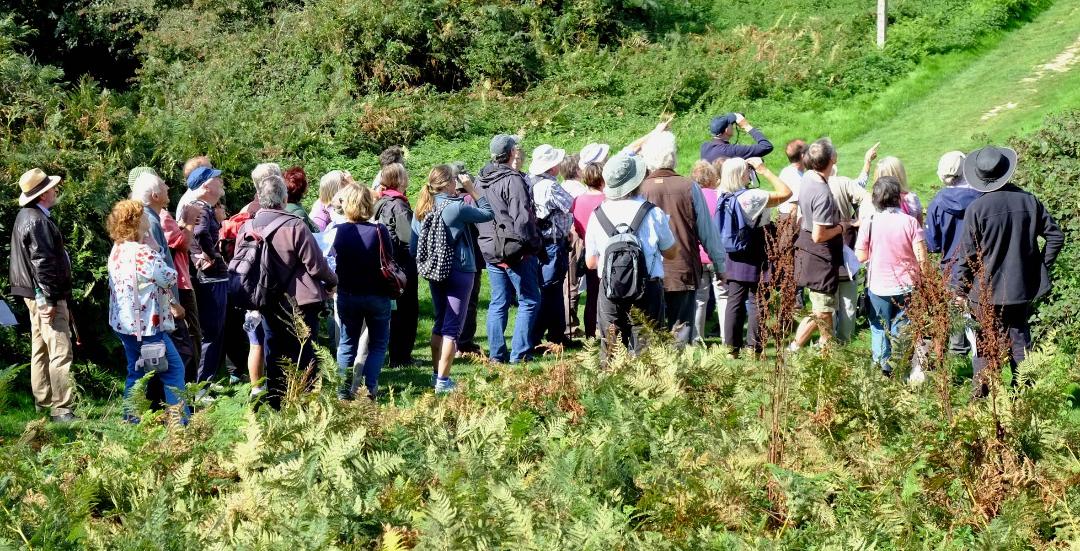
An excellent turn-out of 35 Friends plus four leaders and two helpers enjoyed the September sunshine on a walk to Warren Glen and the Quarry.
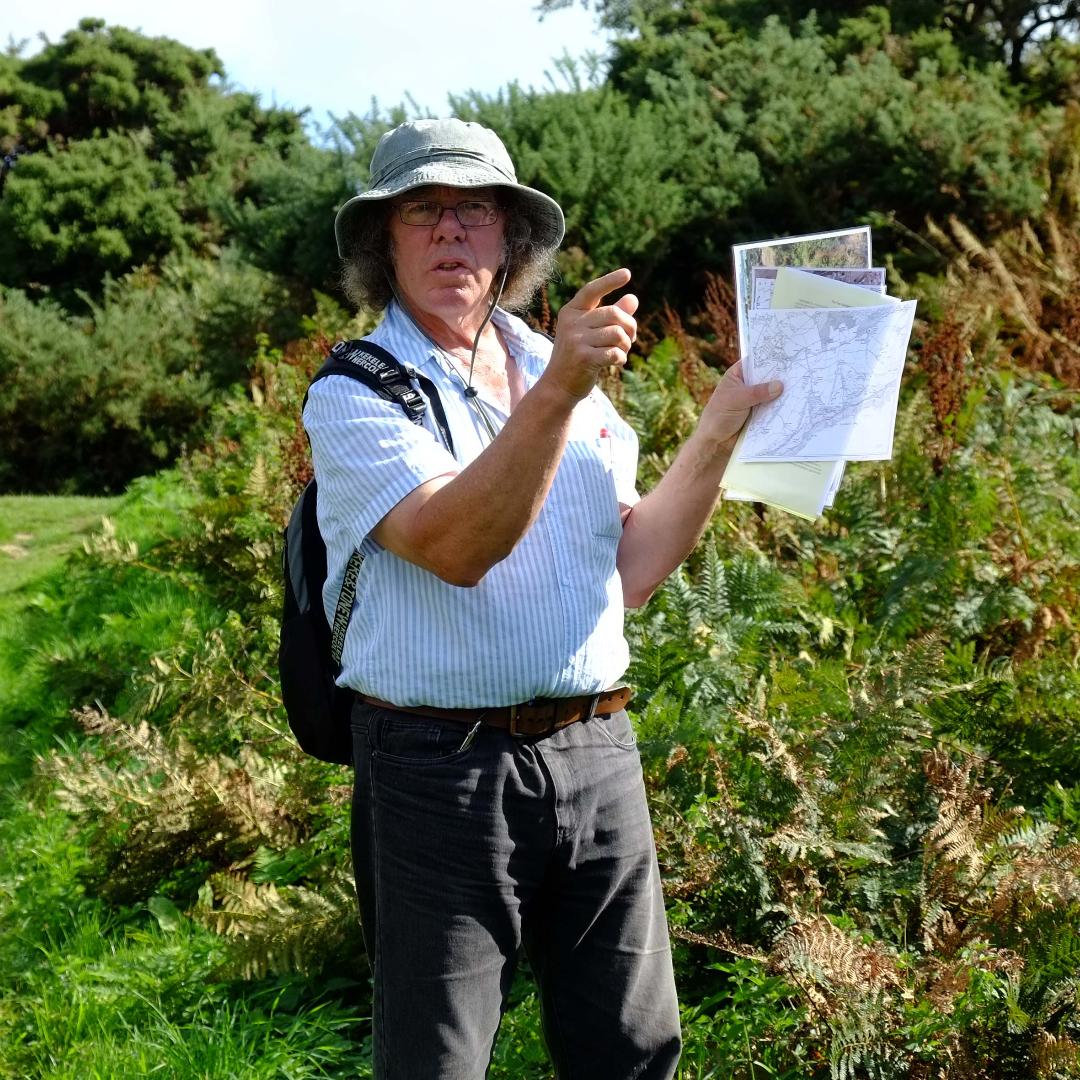
Our route took us down to Coastguard Cottages and along the access-for-all path to just past the kissing-gate where we had an excellent view over the fields towards Warren Glen and Steve Peak, our historian, regaled us with tales of the use of the glen not only for smugglers but also for target practice during various military conflicts in the past. As a boy Steve and his pals used to wander through the fields looking for trophies such as bullets and even on one occasion found two unexploded mortar bombs which they excitedly carried to the cliff edge to drop on the beach below. Luckily the mortars didn’t explode!
Judy Clark, our botanist, then explained about the management of the area using Exmoor ponies and heavy horses to control the invasive bracken. This work then allows more fragile native flowers to thrive. Insects and other creatures also benefit. Judy also told us to keep an eye open for a tiny pink flower which can be found on the sandy path beside the pony field and, sure enough, an easily overlooked miniscule Sand Spurrey ( Spergularia rubra’) was quickly spotted by Stephanie Donaldson and had its photo taken many times over.
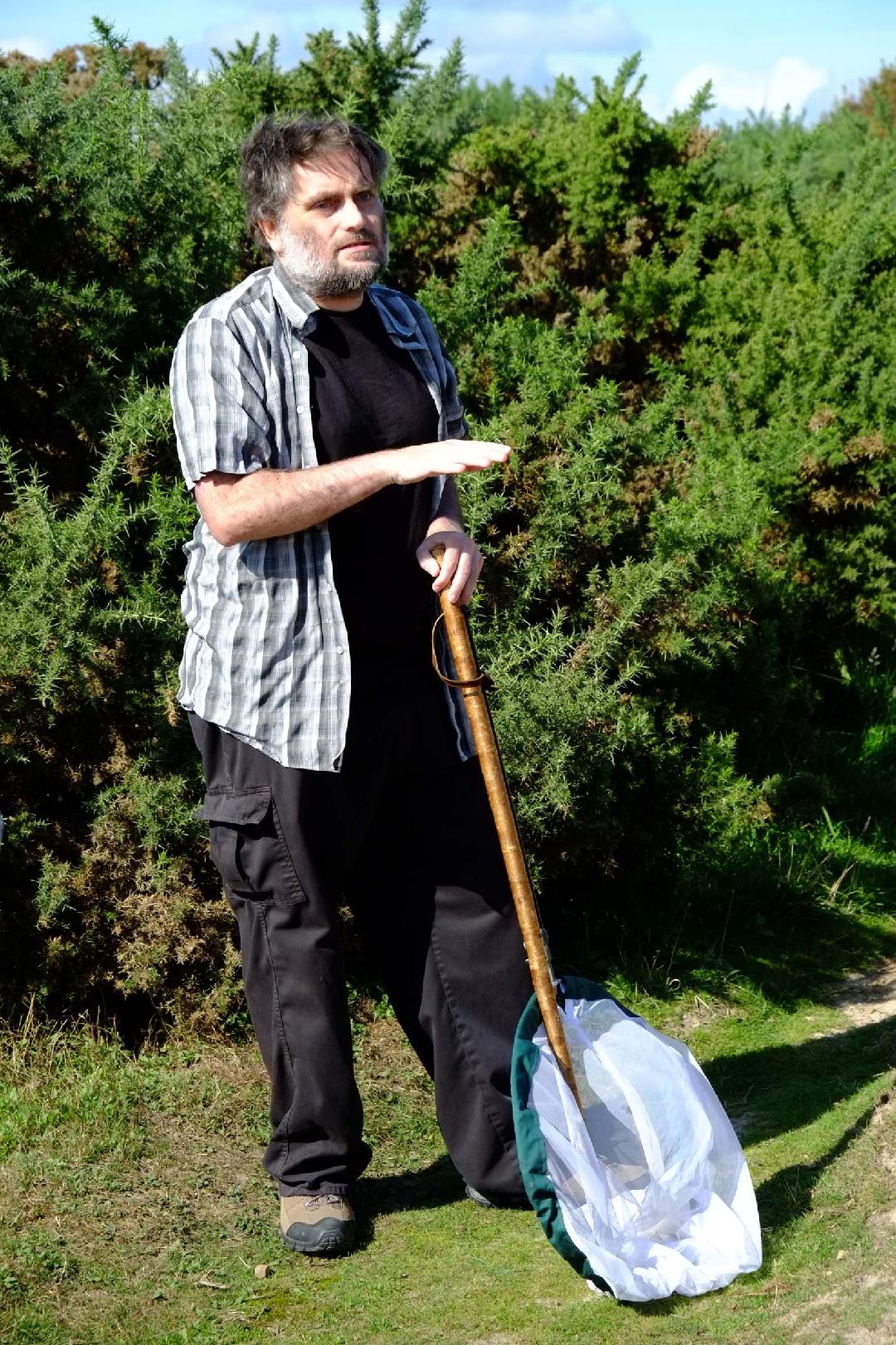
Further along the path Andy Phillips, our entomologist, explained about the life-cycle of various solitary bees which make their burrows in the sandy paths. However it was a bit late in the year to find any evidence of their presence on this walk. Andy also mentioned the importance of the Country Park for other invertebrates such as grasshoppers and bush crickets. In fact in August 2006 a new breeding species to Britain, Sickle-bearing bush-cricket (Phaneroptera falcate), was recorded from Warren Glen. Another fairly recent coloniser of the nature reserve is Roesel’s bush-cricket (Pholidoptera griseoaptera.) This is now locally very abundant and several were heard singing on our walk.
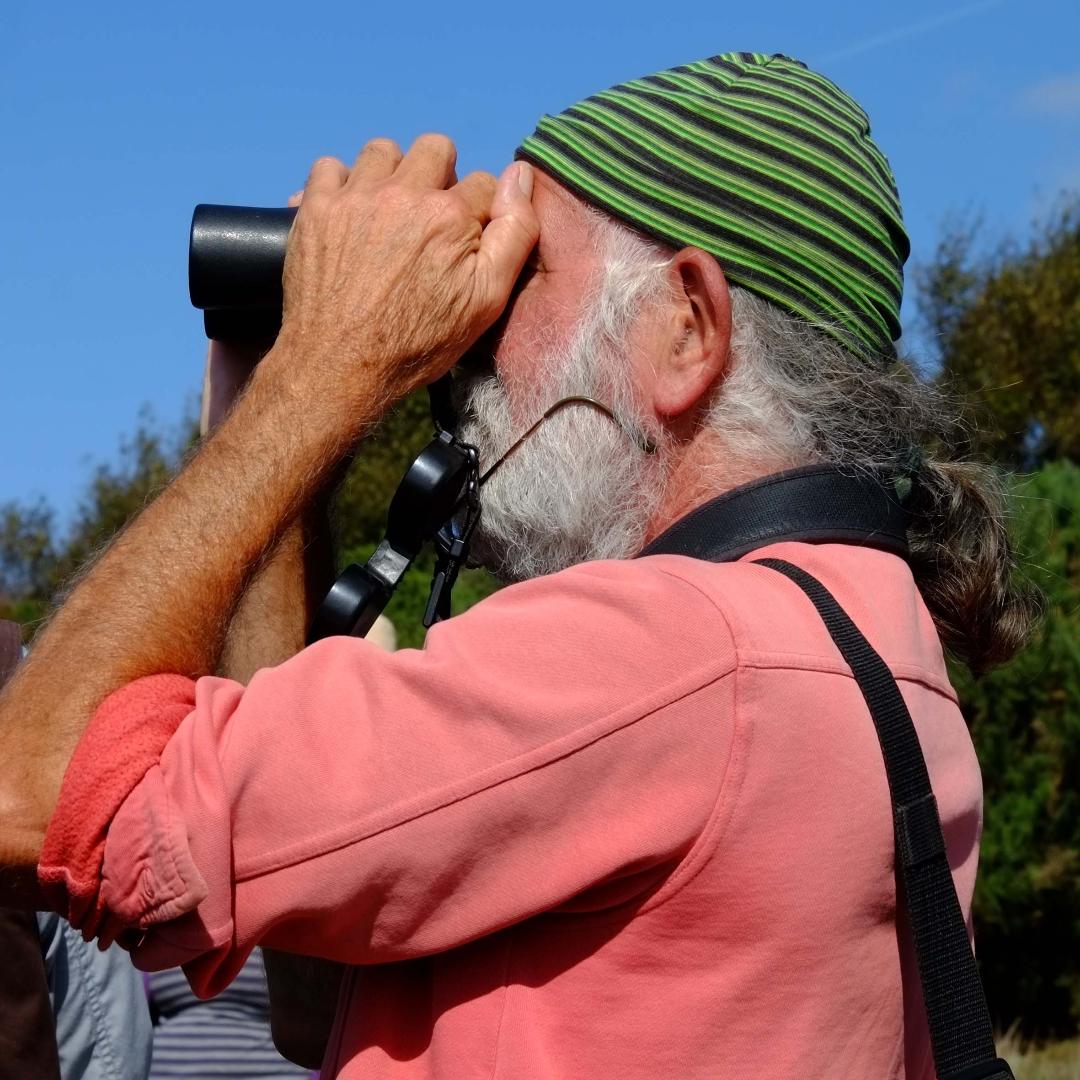
Alan Parker, our ornithologist, pointed out various interesting birds in the skies overhead and especially good views were had of several birds of prey – Buzzard, Sparrowhawk and Kestrel. It was a bit late in the day for seeing any migrating birds but Alan will be leading our regular Autumn Migration Watch on 13th October and with an earlier start time of 8am we hope to spot a good variety of migrating birds.
Our walk continued into the Quarry where Steve told us something of its history. Most of us were surprised to learn that it only dates from the 1930s. Its importance was in supplying high quality sand for the glass-making industry especially during the Second World War but it fell into disuse in the 1950s.
Andy was busy with his sweep net in the quarry especially on the gorse bushes. Several people spotted a large number of webs on the gorse and Andy has confirmed that these were made by Gorse mites (Tetranychus lintearius). He doesn’t recall seeing such a large infestation before. Also on the gorse
Andy found a leaf beetle (Chrysolina banksii), a local species which he has only found a couple of times before on the undercliff, so an interesting record.
Time was running out so a hearty thanks was made to all four experts for a most enjoyable and informative walk before we climbed out of the quarry and made our way back to the car park full of new-found knowledge!