


Friends Photo Competition
The Friends of Hastings Country Park NR announced the winners of their first photography competition at the AGM on 11 July.
The first prize £50 was awarded to Daisy Reid, a GCSE school student, for her entry of “Raindrops on Hawthorn Leaves”.
The judges awarded second prizes of £25 each to Helen Austin and Pete Thomas.
Helen’s winning shot was of a “View down the steps to the Quarry”. Pete entered a photo of “Looking west towards Beachy Head"
Congratulations to all the winners, and many thanks to other members of the Friends who submitted entries.
Daisy Reid - Raindrops on Hawthorn Leaves
Helen Austin - View down the steps to the Quarry Pete Thomas - Looking West to Beachy Head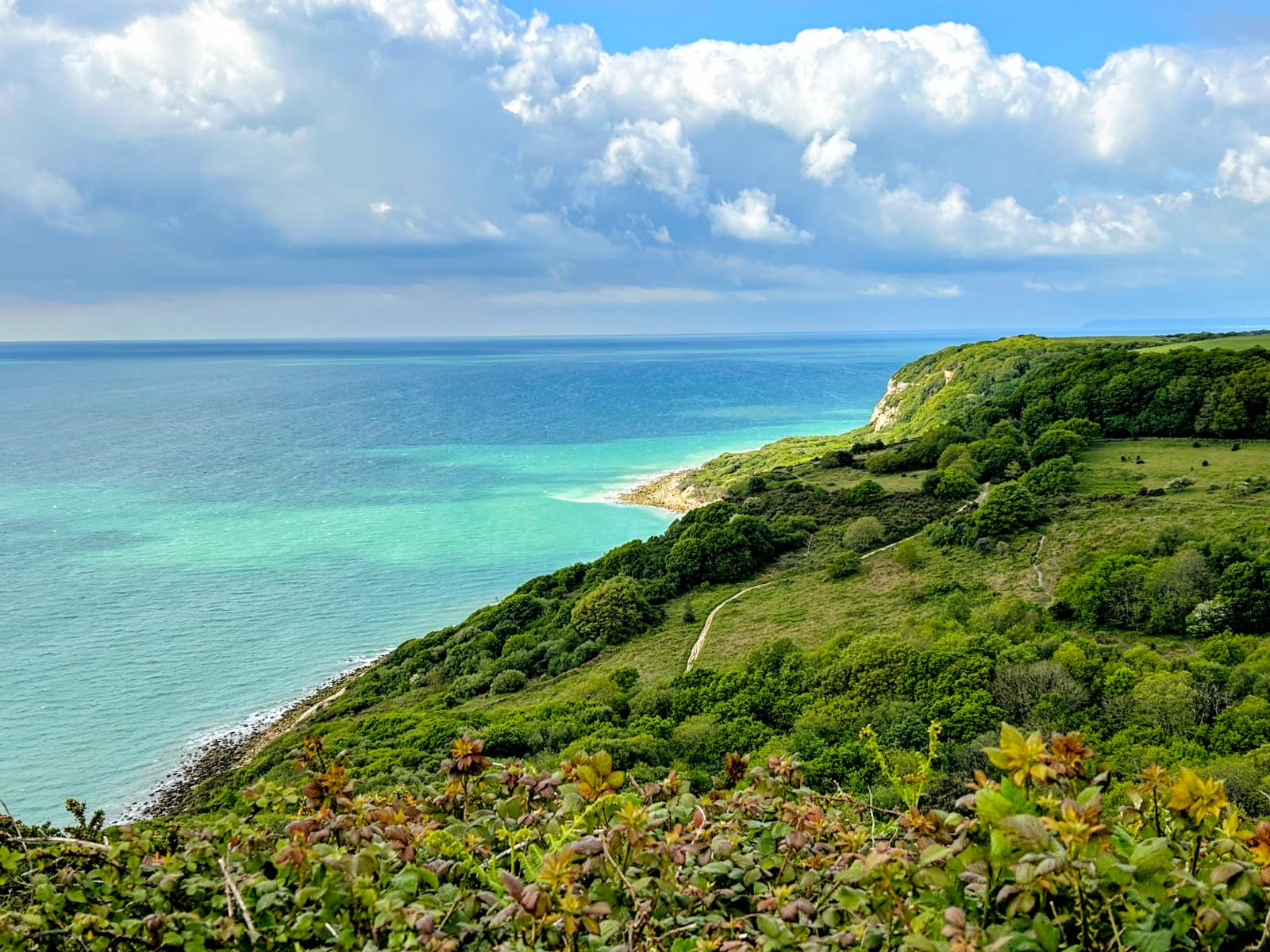
Friends of Hastings Country Park and Nature Reserve submission to Hastings Local Plan
The Friends of Hastings Country Park and Nature Reserve have prepared a submission to the Hastings Local Plan.
This has been prepared by Dr. Judy Clarke with help from John Bridger.
To see the full submission please click here.
Sport England has approved a grant of £4,800 for Hastings Country Park activities
Sport England has awarded over £4,800 to the Friends of Hastings Country Park Nature Reserve for a programme of healthy walks in the Reserve.
The programme of 16 walks - Sticks in the Sticks - will last until the end of the year. It offers Habitat and Heritage Health Walks at Hastings Country Park Nature Reserve for adults who are less active, particularly those with limited mobility or low confidence outdoors. The walks will provide steady, supported routes that help participants increase movement and become familiar with paths they can later use independently. Aiming to remove common barriers such as low confidence, social isolation and a lack of knowledge of key walking routes, the programme will support achievable and sustained walking habits. Each will be led by an experienced conservationist, who is also a trained health walk leader, to help participants learn more about the biodiversity of the Reserve as they walk, talk and have fun.
The walks will be run by the charity Groundwork South on behalf of the Friends, as part of a continuing partnership between the two organisations. People interested in joining the walks should contact Groundwork South by emailing
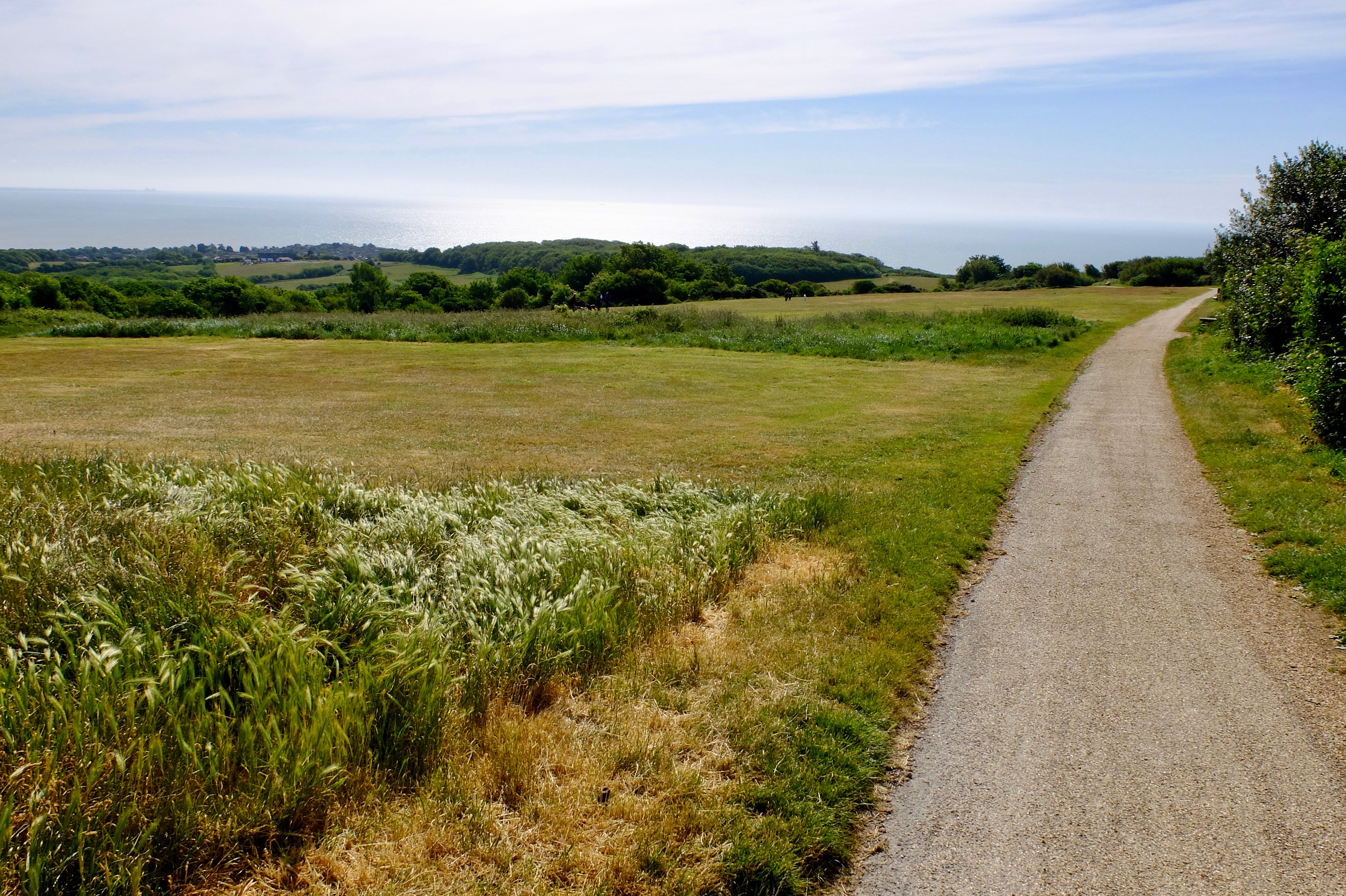
Photo courtesy of Jon Cole
CONTINUITY AND CHANGE: WHAT NEXT FOR HASTINGS COUNTRY PARK NATURE RESERVE?
We can trace back human activity on what is now Hastings Country Park Nature Reserve for thousands of years. Human use of the area has evolved over the intervening centuries. And, unpredictably and indirectly, Brexit is now proving to be a new factor for change, and possibly one which provides benefits for nature conservation in the Reserve. But, conversely, the prospect of Local Government Reorganisation creates fresh uncertainties for local conservation. These impending changes emerged in a talk which Cllr Jo Walker and Murray Davidson gave to the Friends of Hastings Country Park Nature Reserve in January.
What did the Romans ever do for us?
What is now the Reserve has a history* stretching back across geological eons. Indeed, the sandstone cliffs that dominate the landscape are remnants of a time when dinosaurs roamed the Earth – of course, millions of years before humans. But if an iguanadon popped up its head between the ferns when Fairlight Glen is in full leaf, we wouldn’t be totally surprised.
From the times of the Romans and then the Haestingas Saxons, the human history of the area was about farming in various forms. In the later medieval period the picture is of small islands of open arable fields around farms. These would have been surrounded by pasture, woodland and scrub. Then from about 1500 onwards we see the intensification of farming, and then the unpopular process of enclosure of common land in the hands of big landowners like the Milward and Collier families.
Into the 20th century the same two families gradually sold off the land to Hastings Council, sometimes at a pretty price. But it had been Sarah, Countess Waldegrave who made sure that the land of what is now the Reserve remained free of the sort of development which scars so much of the coast.
The area was officially designated as a Country Park in 1974, a move which marked a real turning point in further safeguarding the area. Hastings BC, as the owner of the area, later designated the area as a Local Nature Reserve in 2006. Cllr. Jo Walker, as the Council’s lead on all things environmental and Murray Davidson, a 30 year veteran of leading the cause for our local nature reserves and green spaces, really emphasised in their talk the importance of Hastings Country Park as a Nature Reserve, serving as it does as a critical environmental asset, playing an integral role in ecological conservation, climate regulation, and carbon sequestration.
The Reserve has such a great range of biodiversity because, as the area where the High Weald meets the sea, it has a rare mixture of habitats - grasslands, heathlands, woodlands, cliffs, and maritime habitats. Each supports a particular community of species of mammals, birds, plants and invertebrates.
The flora within the Reserve is particularly remarkable. The heathland areas have vibrant patches of heather, gorse, and other, rarer species of wildflowers. They play a key role in the foodchain for butterflies, moths, and other insects and birds. Meanwhile, the patches of ancient woodlands are home to a wide range of tree species, from oak and birch to holly and yew, offering shelter and food for other organisms.
What did Brexit ever do for us?
Leaving the EU prompted a change by central Government in support systems for farmers. Less emphasis was to be given to production and more to habitat management and environmental conservation.
This has had an effect locally. The Council had long known that the arable fields in the Reserve were not commercially viable.The shift in national funding mechanism required a radical rethink about how to manage the Reserve for its primary purpose.
Talking to the Friends in January, Jo Walker and Murray Davidson explained the opportunities created by the grant of £1m which the Council had secured from Natural England for a new approach to Countryside Stewardship for the Reserve. This 10 year grant, running from 2023, will be used in part to convert the arable fields to mosaic pasture, or woodland pasture as some people thiink of it.
Murray explained that the full effects of this change of policy might not be seen for 100 years as the new trees which the Council has already started to plant and protect fully develop. These are mainly oaks, deliberately bought as substantial specimens, not just whips, to give them a better chance of survival. Over time, these trees will get surrounded by brambles and scrub. This will give them extra protection from any intruding deer and other grazers, as well as providing new habitat for birds and small mammals.
One can envisage how a natural “mosaic” will get created across the former arable fields. Around the mosaic of trees and scrub, grazing herbivores will be brought in periodically: the chestnut-red Sussex cattle are particularly suited to this sort of task of conservation grazing. And in winter sheep will be brought in because they graze in a different way, dealing with the tussocks which cattle disdain. This will all be managed in partnership with the local farmer who knows the Reserve well from existing operations.
Jo and Murray also explained to the audience of Friends the importance of conservation grazing in other parts of the Reserve: using the Exmoor ponies which can range relatively freely through the Warren Glen area; and from time to time Sussex cattle on the Firehills to keep the acid heathland open and not over-run by gorse.
The Firehills consist of a relatively rare habitat which needs active management to increase biodiversity of birds, plants and invertebrates. That means people too, not just cattle. So Jo and Murray paid tribute to the recent work by the team of conservation volunteers from Groundwork South on “scalloping” the gorse of the Firehills. This team is out year-round once a week or more in all weathers in different parts of the Reserve doing work which the Council wouldn’t now be able to fund. And the Council recognised too the contribution which is made by specialist teams such as the botany group, the “lookerers” keeping an eye on the ponies, as well as the Friends themselves.
Control by Lewes?
Jo mentioned the uncertainties around the issue of Local Government Reorganisation (LGR) which probably means the current Council’s functions being transferred to a single authority in Lewes. Included in that could be management of Hastings Country Park NR. She suggested that it could be argued that a better resourced county-wide authority would be able to add value to nature conservation. Or it might mean that decision-making would be that much more remote.
Murray was reassuring that the Natural England grant money running to 2033 was safe and legally ring-fenced, so it couldn’t be diverted by a new Lewes-based authority to other areas or purposes. And he was reasonably confident that it would be possible to secure a follow-on grant from Natural England beyond 2033, giving at least a degree of independence to the Reserve.
As the Friends, we see LGR as a double-edged sword: with Hastings BC, we have easy access to plans and thinking, as well as personal links with Council members and officers. One of the current uncertainties is how groups like the Friends and Groundwork South would plug into and work with a new council in Lewes. And we doubt that a new authority would really be able to devote more money to nature conservation: LGR will not provide a new money-tree. But at least in principle LGR might facilitate cooperation in nature conservation across current District Council boundaries, something for which the Friends have long argued.
Cllr Jo Walker commented “Having Hastings Country Park Nature Reserve in my portfolio is an absolute privilege. Being more closely involved is incredibly rewarding, and being invited to speak to the Friends was a great opportunity to share the fantastic work already happening and to look ahead to what the future may hold. While Local Government Reorganisation brings a degree of uncertainty, the strong protections in place and the commitment of the local community will ensure the Reserve continues to thrive”
* For a fuller account of the history of the area, read Steve Peak’s “A History of Hastings Country Park”, from which some of the facts above have been taken.
Andrew Colquhoun
Chair, Friends of Hastings Country Park Nature Reserve
Friends Events programme 2026
Friends of Hastings Country Park Nature Reserve
Friends’ Events in 2026
These events are free to members, places for non-members are subject to availability @ £5 per person.
To find out more about what membership has to offer, visit the Friends’ website at: https://fhcpnr.org
Saturday 17th January from 2:00 – 3:30 p.m. at the Isabel Blackman Centre
What does the future have in store for Hastings Country Park Nature Reserve?
A presentation by Cllr Jo Walker.
The Friends are delighted to start the New Year with an overview of the vision, challenges, and opportunities for Hastings Country Park Nature Reserve over the coming years, including how stewardship, community, and vision shape the landscape.
Cllr Jo Walker was elected to HBC in May 2024 and has the portfolio of Environment and Neighbourhood Wellbeing. This covers many things, including, of course, the Hastings Country Park Nature Reserve.
She is a qualified Early Years Teacher and works as a childminder as well as running a Forest School parent and toddler group. Cllr Walker is a trustee for Ore Community Land Trust and runs the volunteer sessions at Speckled Wood and Ore Community Garden. She also has an interest in local and family history and can trace links to Hastings going back centuries!
Saturday 14th Feb. from 2:00 – 3:30 p.m. at the Isabel Blackman Centre
An illustrated talk: Fashion, Fury and Feathers, Women’s Fight for Change and how the RSPB came to be, with Tessa Boase.
When Tessa Boase told the RSPB she wanted to write their early story, they refused to let her visit their archives. To a former investigative journalist, this was a challenge she could not resist…
This talk shines a light on the hidden story of women’s love affair with plumage – and of the brave eco feminists who fought back on behalf of the birds. Etta Lemon, Emily Williamson and Eliza Phillips campaigned long and hard to crush the mighty plumage trade. They coaxed the British people to fall in love with birds. Yet they have not been remembered by history. With meticulous research, rare archive images and vivid storytelling, Tessa has brought to life the RSPB’s extraordinary origins story.
Tessa is an author, journalist and social historian. She has featured on BBC Radio 4’s Woman’s Hour and has appeared on Tony Robinson’s History of Britain and also Secrets of the National Trust. Tessa grew up in the Ashdown Forest, Sussex and now lives in St Leonards-on-Sea, with a pair of binoculars by the back door. Birds or neighbours, she’s not fussy!
To find out more about Tessa and her work, including her publications, visit https://www.tessaboase.com
Saturday 21st March from 2:00 – 3:30 p.m. at the Isabel Blackman Centre
An illustrated talk: Bird ringing, with Christine George
We extend a warm welcome to Christine George who will talk to the Friends about bird ringing. Her presentation will cover what bird ringing is, why and how we do it, along with numerous interesting snippets and facts. There will be a selection of equipment on display and if time allows, we will see how to hold and ring birds using a model.
Christine has had a life-long interested in birds. The opportunity to start training to be a ringer came some 17 years ago. She mainly rings locally but has ringed birds on a remote Scottish Island, and in Kenya. She has also been involved with cannon netting waders on The Wash. Since starting to ring birds, she has progressed from ringing trainee to ringing trainer.
Saturday 11th April from 2:00 – 3:30 p.m. at the Isabel Blackman Centre
An illustrated talk: The moths of Sussex and the Sussex Moth Group, with Brett Taylor
We are very pleased that Brett is available to provide a presentation on moths, including those found locally, and the work of the Sussex Moth Group. In today’s talk we will learn, amongst other things, about how moths are captured and identified, the commonly seen species, changes in migration patterns, and the importance of reporting unusual sightings and the process for doing so. Brett will also talk about resources for people new to 'mothing'.
Brett has been trapping and recording moths since he was a teenager, and for the first years he lived in Hastings and recorded moths there. He has been a volunteer country park ranger for the Hastings country park, taking tourists on guided fossil walks on the beach at Rock-a-Nore. He is now an active member of the Sussex Moth Group where members and friends can meet to share experiences and information about the moths of Sussex.
Tuesday 12th May from 08:30 – 10:30 a.m. in the Country Park
A guided walk: Identifying birds, with James Duncan
We are delighted that James is available again to lead another ‘birding’ walk. No two days are the same and this will be an excellent opportunity to extend your knowledge of the species to be found in the Country Park in late spring, perhaps ones you’ve not heard or seen before.
James is a Wilder Communities Officer with Sussex Wildlife Trust, delivering walks, talks, identification courses and management advice across the county for the last 7 years. A lifelong naturalist, he's passionate about all aspects of natural history and conservation. Before returning to his home county of Sussex, he worked for the RSPB surveying corncrake and wader populations and leading guided walks in the Outer Hebrides, whilst undertaking a myriad of practical conservation tasks across the islands.
Saturday 13th June, from 10:30 – 12.30 p.m. in the Country Park
A guided walk: The plants of the East Hill, Hastings with Dr Judy Clark and Jacqueline Rose
This is another chance to join Judy and Jacqueline on one of their popular guided walks. This year they will be looking at the flora at the western end of the Hastings Country Park Nature Reserve. The East Hill was recently included in the management plan for the Reserve and is now being managed for the benefit of wild plants and insects. It might look as if there’s not a lot there besides grasses, but the area is surprisingly diverse, with a good variety of plants within a relatively small area. Come along and discover what is growing there.
Jacqueline and Judy are field botanists with many years’ experience recording plants in East Sussex, including in HCPNR as part of the monitoring of the success of habitat management programmes.
Saturday 18th July from 10:30 - 12:00, tbc in the Country Park
A guided walk: The Trees of Hastings Country Park, with Doug Edworthy
Ever wondered which trees love growing in Hastings Country Park Nature Reserve? Would you like to learn more about them and how they help nature thrive? Come on a walk through the reserve led by a ‘Tree Champion’ who will help you discover our native trees and the fantastic natural environment they provide for insects, small mammals and for people.
Doug Edworthy is Tree Warden for two rural parishes, a member of the Ancient Tree Forum and is a Verifier of Ancient and Veteran trees for the Woodland Trust. He leads guided walks in Dallington Forest, is a passionate advocate for trees of all ages and he delights in helping people, young and old, understand and appreciate these long-lived and important beings.
Saturday 29th August from 08.30 -11.30 a.m. in the Country Park
A guided walk: Bird migration, and grasshoppers and bush-crickets - what’s in the Country Park? with Ralph Hobbs.
We welcome Ralph Hobbs again to lead this popular activity, with the added bonus of finding grasshoppers! Bird migration will be in full swing by late August with various warblers centre stage. It is also the perfect time for spotting grasshoppers and bush-crickets. With luck and some warm weather, we can hope to find 3 or 4 species of grasshopper and bush-crickets as well as resident birds and the passing migrants. Guidance will be provided on how to identify all the birds and grasshoppers we come across, including how to recognise their distinctive sounds and songs.
Ralph has been a keen naturalist and birder all his adult life, since first becoming interested in butterflies at junior school! With a degree in Zoology, he has worked as a conservation adviser for the Sussex Farming and Wildlife Advisory Group and then English Nature and Natural England, more recently working as a freelance ecologist. Ralph has enjoyed watching and studying birds and bird migration for over 50 years, not only in Hastings Country Park and Sussex, but around the world. In retirement Ralph is kept busy as a Trustee for the Amateur Entomologists' Society and three nature reserve-owning Trusts and is also the Sussex recorder for Orthoptera (grasshoppers and bush-crickets).
Thursday 24th September from 19:00 – 20:30, starting at the Bale House
A guided walk: Looking for bats, with Jill Tyson.
Join Jill Tyson from Groundwork South in the Bale House Visitor Centre for a short presentation about bats, followed by a red torch walk along the edge of the Country Park to see and hear bats nearby. Participants will be able to use handheld bat detectors which make the bats’ ultrasonic calls and echolocation audible to the human ear. Please wear warm clothing and sturdy footwear.
Refreshments will be provided.
Jill is an experienced naturalist and has been working in Hastings Country Park Nature Reserve for the last 6 years. As well as managing the Bale House, she delivers activities and events, education sessions and practical conservation sessions in the Nature Reserve, which some of the Friends members participate in.
Saturday 17th October from 10:30 – 12:00 in the Country Park
A guided walk: Fungi foray, with Andy Overall
Kingdom Fungi is finally coming into focus in a bigger way, having lagged the study of Animals and Plants by at least a hundred years. Food, drink and medicines have all been influenced by fungi and now we are finding out more about how important they are for our environment. The diversity of fungi is bewildering, from coral-like forms, puffballs, brackets, discs, to trumpets and of course mushrooms.
The British woodlands and parklands are home to a vast array of these fungi, in all their forms and colours. A fungi foray is a good way of seeing and learning about some of these wonderful mushrooms and toadstools.
Andy is a Field Mycologist with some 25 years’ experience. He is a published author and writer on the subject and has carried out fungi surveys for the Royal Parks since 2008, including all the major parks. Andy has led walks and taken beginners’ workshops for a similar amount time.
Saturday 14th November from 2:00 – 3:30 p.m. at the Isabel Blackman Centre
An illustrated talk: Fossil Folklore, with Ken Brooks
In medieval times a fascinating variety of folklore beliefs developed around fossils, mostly about their medicinal and magical properties. Names, such as ‘thunderbolts’, ‘fairy loaves’, ‘snakestones’ and ‘devil’s toenails’ were widely used for different species. It was not until the 19th century and the development of palaeontology that the true origin of fossils was understood. During this illustrated talk we will learn about our ancestors’ ideas regarding fossils, and ‘hands on’ specimens will be featured and discussed.
After twenty years as a schoolteacher, Ken moved into adult education as a tutor specialising in history and geology. In 1992 his enthusiasm for earth sciences led to him forming the Hastings and District Geological Society. He has been awarded the Halsted Medal by the Geologists’ Association, presented for work of
outstanding merit, and published Geology and Fossils of the Hastings Area. He has also appeared on ‘The Sussex Coast with Kate Humble’, contributing a piece on fossils found locally.
Saturday 5th December from 2:00 – 3:30 p.m. at the Isabel Blackman Centre
An illustrated talk: Hedgehogs, and the work of the East Sussex Wildlife Rescue & Ambulance Service, with Trevor Weeks MBE
We are delighted that East Sussex Wildlife Rescue & Ambulance Service (WRAS) can provide a talk for the Friends. It will primarily focus on hedgehogs, covering their ecology, habitat, population numbers and trends. They will also try to combat myths surrounding the species, as well as what threats hedgehogs face, before covering how we can help the species. We will also learn about the wider work of WRAS.
The talk will be given by Trevor Weeks, Founding Director of WRAS. He has had a life-long passion for the natural world, establishing what would ultimately become the charity back in 1985, when he was only 13 years old, taking in injured wild animals and – alongside his mum – rehabilitating them. In 1996, WRAS was formed, with a voluntary group supporting the rescue and release of local wildlife, becoming a registered charitable company in 2005. In 2012, Trevor received an MBE for his services to animal welfare.
The charity has continued to grow, now admitting tens of thousands of casualties per year and providing a wildlife rescue and ambulance service across the East Sussex region.
Parking for events:
Parking is available outside the Isabel Blackman Centre, 3 Winding Street, Hastings, East Sussex, TN34 3AT but there are only a few bays, and spaces may not be available. However, there is ample parking at the near-by Stade car park off Rock-a-Nore Road, Hastings, East Sussex, TN34 3DW.
For outdoor events, there is parking available at the Bale House Visitor Centre, Lower Coastguard Lane, Fairlight, East Sussex, TN35 4AD. Details of the meeting place will be provided shortly before the event, and participants may decide that the Bale House is not the most convenient place for them and to use an alternative car park.
Find out more about the Friends at:
The Bale House Wildflower Meadow
We have now successfully reached the end of our crowfunding campaign for the Bale House Wildflower Meadow. Thanks to generous donations from many of you, and from the matched funding from the Aviva Save Our Wild Isles Fund, we raised a wonderful £6199. This exceeds both our original target and what Aviva calls our stretch target.
We have already started work to cut the grass around the Bale House in preparation, but our meadow project is not designed to produce an instant result. What it will produce is a permanent area of wildflowers and grasses buzzing with insects that replicates as far as possible the sort of meadow that has almost disappeared from the East Sussex countryside.
It will have paths mown through it to enable everyone to discover and enjoy the plants and insects. But this will take time, time measured in years not months. In the meantime, watch out for our habitat container in which we will grow some of the wildflowers to demonstrate what will eventually inhabit the meadow. And watch out too for opportunities to get involved, be it with mowing, removing unwanted plants, or growing wildflowers from seed.
Thank you once again to all those who have supported the project so far.
Crowdfunding for a wildflower meadow in Hastings Country Park
https://www.avivacommunityfund.co.uk/p/bhmeadow
The Friends of Hastings Country Park Nature Reserve are working with Aviva on a fundraising campaign for a wildflower meadow beside the Bale House Visitor Centre in the Reserve
In just two years, the Bale House has become a great asset for the Hastings community and for conservation. In particular, it has helped local people and visitors to understand better the importance of the Reserve for nature conservation and restoration.
But the Friends feel that the surroundings of the Bale House could be improved by developing a wildflower meadow there. The first photograph with this post shows what the area looks like at present.
Now there is an opportunity to do something about that. The Aviva Save our Wild Isles project is giving a chance to raise funds to create the meadow in that area. Through crowd-funding, money can be raised to create something which is not only beautiful and inspiring, but of great value in terms of conservation and education, especially for local schools. The second photograph shows what we might be able to achieve.
Meadows are among the UK's most wildlife-rich habitats and also one of the most threatened.
A meadow around the Bale House will:
- provide more space for wild plants and insects
- help visitors to appreciate and better understand nature and wildlife in general and the habitats, plants and insects of the Reserve in particular
- be accessible to everyone, a space where anyone can discover nature or just be in it.
- inspire our local community and visitors from further afield to take action of their own to protect, restore or create wildflower meadows
- and last, but not least, do justice to our innovative visitor centre.
The committee of the Friends has a costed plan for the project and a work programme ready for implementing it. The estimate for the cost is £4860, including future maintenance. For every pound which the Friends can raise, Aviva will give us £2 more. The campaign will last six weeks to mid-December.
Andrew Colquhoun, chair of the Friends of the Reserve commented “If you share our passion for the Reserve - and hopefully a vision for something really imaginative around the Bale House, it would be great if you were able to help. Just click on the link below to go to the donation page”.
https://www.avivacommunityfund.co.uk/p/bhmeadow
The current site:-
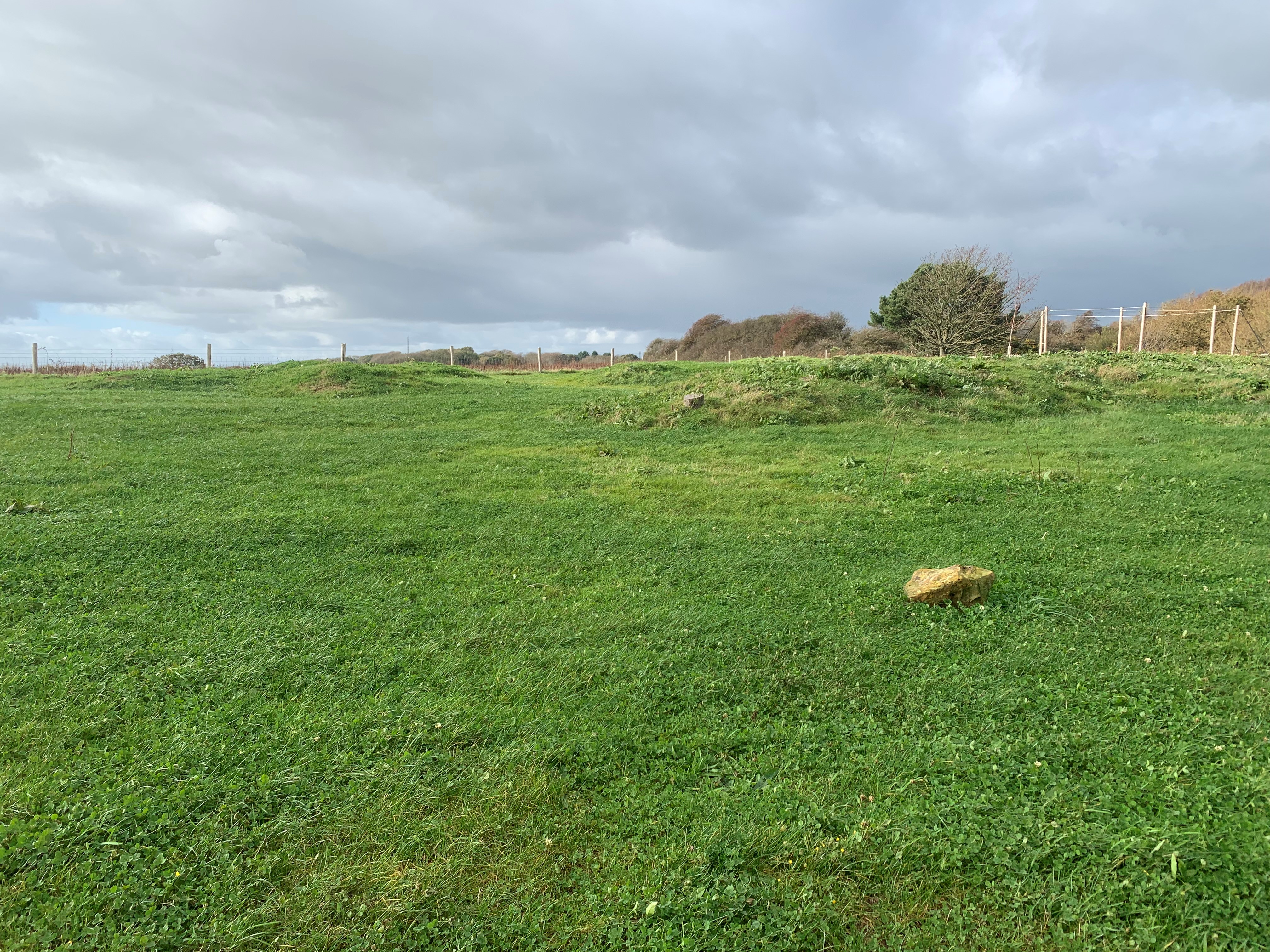
And a vision for its future:-
