


Fungi are everywhere but they are easy to miss. They are inside you and around you. They sustain you and all that you depend on. As you read these words, fungi are changing the way that life happens, as they have done for more than a billion years. They are eating rock, making soil, digesting pollutants, nourishing and killing plants, surviving in space, inducing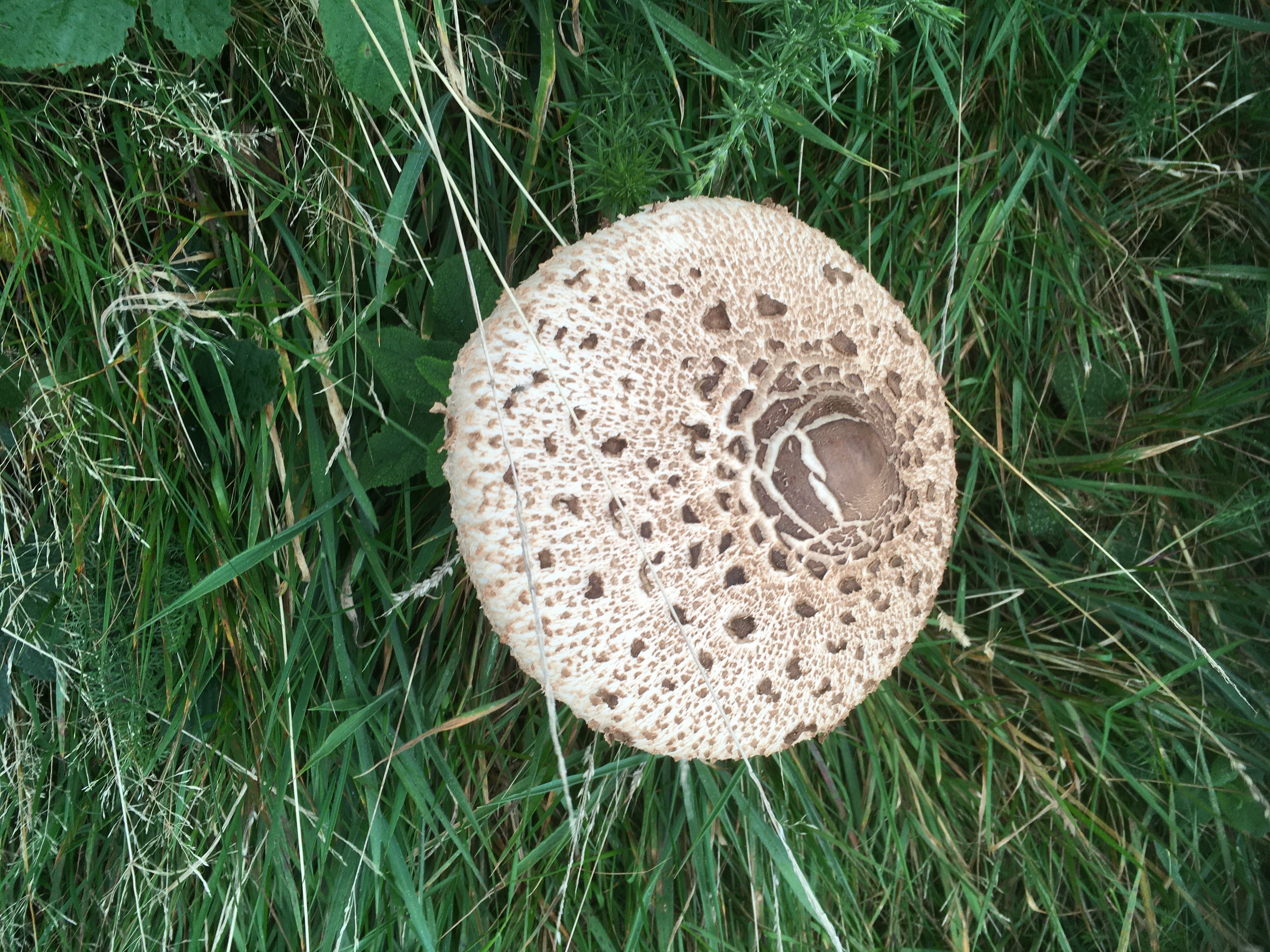 Parasol - Macrolepiota procera visions, producing foods, making medicines, manipulating animal behaviour and influencing the composition of the Earth’s atmosphere. Fungi provide a key to understanding the planet on which we live, and the ways we think, feel and behave. Yet they live their lives largely hidden from view, and more than 90 per cent of their species remain undocumented.’ (Merlin Sheldrake: Entangled Life).
On our Saturday morning activities in recent months, we’ve been out looking for the more visible – and possibly more familiar – wildlife of the Country Park: its flowering plants and migrating birds. Over a couple of excursions, we were able to ‘document’ (we wrote the names down and took their pictures!) a wide range of wild flowers. We were less fortunate with the migrating birds as you will see from Alan Parker’s report. When it came to our planned Fungus Foray in November, at the end of a week of dry weather, it was touch and go whether we would find anything or whether the fungi would continue to ‘live their lives largely hidden from view,’ as Merlin Sheldrake suggests. After some preliminary recces earlier in the week, we decided to focus our attention on the Plantation, the pretty wood on the north-facing slope of the Fire Hills, accessible on foot from Fyrsway or the Bale House. We’d found fewer than a handful of fungi species, but that was based on a cursory check by amateurs – and as the event was already oversubscribed with a group of 20 members we had to go ahead.
Martin Allison, County Recorder for Fungi, was our expert guide.
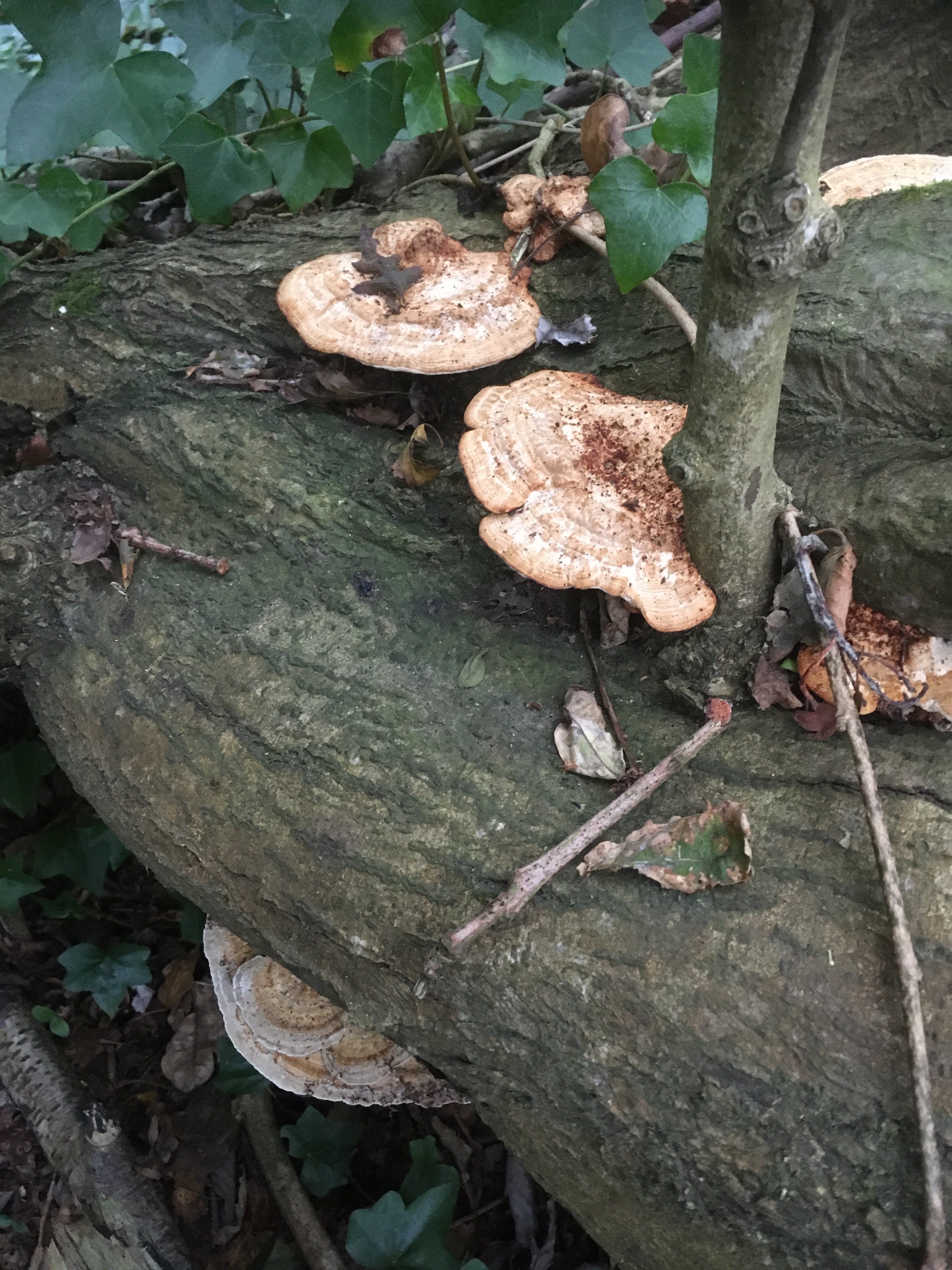 Blushing Bracket - Daedaleopsis confragosaStarting at the Bale House, by the time we stepped off the path into the Plantation we’d already found, and Martin had identified, half-a-dozen different species including a magnificent Parasol Macrolepiota procera. It’s quite common in the Country Park and not a mushroom that ‘hides from view’, appearing in unimproved pasture and woodland edges, but a good start. By the end of our two-hour walk, and after a lot of hunting through undergrowth and over fallen trees, we had found 27 different species, including boletes, gilled fungi, bracket fungi, puffballs and cap fungi. Martin took some specimens away for detailed examination and for recording at the Sussex Biodiversity Record Centre. For us amateurs, it was fascinating to learn the names, (both common and Latin) of our 27 species and reasons behind the names. Stereum hirsutum, known commonly as Hairy Curtain Crust or False Turkey Tail is both tough and hairy, as the Latin suggests. The tiny white Witches’ Egg that we found grows eventually to become an aptly-named Stinkhorn. The mature form certainly deserves its Latin name, Phallus impudicus. Xylaria polymorpha, Dead Man’s Fingers, has uncanny pitch-black digits poking out of the leaf-mould and Blushing Bracket Daedaleopsis confragosa shows shades of pink on its upper surface. Its underside is a maze of pores, hence the reference to Daedalus, ancient maker of mazes. Southern Artists’ Bracket Ganoderma astrale is so-called because artists draw pictures for sale on its surface, and Birch Polypore Piptoporus betulinus or Razor Strop Fungus was used by countrymen in the past to sharpen their cutthroats.
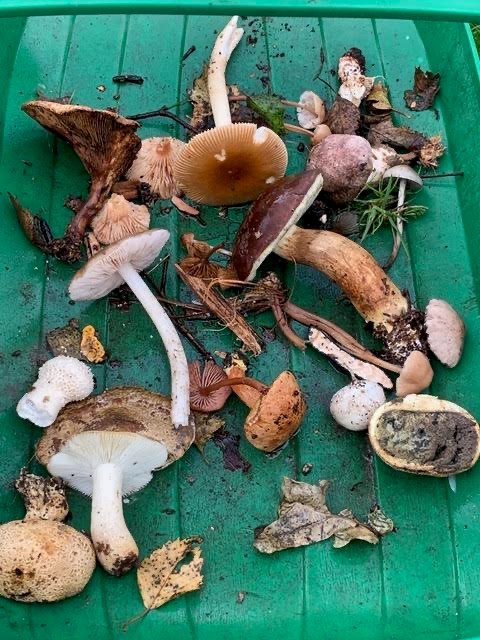 It turns out that our morning’s total amounted to over half of the total fungi recordings for Hastings Country Park currently on SxBRC’s website. Martin’s verdict: ‘Nothing out of the ordinary but a nice mix of species and more than I was expecting,’ and certainly enough to make our event worthwhile. Personally, I came home inspired and promptly bought a copy of Merlin Sheldrake’s wide-ranging and fascinating book about fungi and the ways in which they have changed and continue to change ‘the way life happens’, as he says in his introduction. Then it rained, and the next day there was a handsome cluster of Spectacular Rustgill (Gymnopilus junonius) on a tree stump at the bottom of the garden.
David Jeffery Spectacular Rustgill - Gymnopilus juonius
Notes:
To learn more about wildlife recording in Sussex, visit the Sussex Biodiversity Record Centre’s website: sxbrc.org.uk/recording/shareData.php .
To read Martin Allison’s report on fungi finds in Sussex in 2020, go to pages 4-5 of SxBRC’s most recent annual report: sxbrc.org.uk/projects/publications/Adastra2020
Entangled Life: How Fungi Make our Worlds, Change our Minds, and Shape our Futures; Merlin Sheldrake; pub. Vintage (2021); ISBN 9781784708276; £10.99 paperback
Watch Merlin Sheldrake eat his words on his website: www.merlinsheldrake.com/videos